Showing posts with label Punk. Show all posts

Sunday, March 22, 2015

The 10 Most Under-Appreciated Punk Rock Albums Ever

If you surf around the Internets long enough, you're bound to stumble on this or that person's list of the top 10 or 15 or 25 Punk Rock Albums of All Time.  You'll also quickly notice that the same titles seem to crop up on these lists over and over again: Never Mind The Bollocks, Damned Damned Damned, the first Ramones record, Black Flag's Damaged, Fresh Fruit For Rotting Vegetables, London Calling, etc. Of course, those titles keep coming up because they are undeniably great records.  But you'd start to think they're the only ones worth keeping on your shelves if you're old enough to remember those days, or the only ones to look for if you're a young'n looking to build a punk collection.

Well, I'm here to wave the banner for those that remain unheralded!  There's a ton of great vintage punk rock vinyl out there just waiting to be rediscovered by the newest generation of leather jacket clad crate-diggers.  Allow me to draw a handful of them to your attention.  Herewith I offer, in no particular order, ten of the most under-appreciated punk rock albums out there.  If you see any of these on one of your vinyl-buying journeys, grab them; you will not be disappointed!

Henry Rollins - Hot Animal Machine (1987)
Rollins' first solo effort brought original Black Flag intensity back to a post-Black Flag world.  This is Henry at his alienated-from-society best: power chords and paranoia churn at peak volume on tracks like "Lost And Found" and "There's A Man Outside;" the creepiness factor is upped on covers of Suicide's "Ghost Rider" and The Velvet Underground's "Move Right In;" a truly harrowing report of a domestic violence incident, "A Man And A Woman," closes the album with the kind of jam Rollins Band would become known for.  Stunning.

Kraut - An Adjustment To Society (1983)
The debut album from one of the first and best bands to emerge in the early-'80s New York hardcore scene is solid start to finish.  They were young (drummer Johnny Feedback was 15 at the time) and determined and had a couple of aces up their sleeves: ex-Pistol Steve Jones befriended the band and plays on a few tracks; they made a video for the lead (and best) track, "All Twisted," that actually saw minor rotation on MTV (!); they made their debut as a band opening for The Clash.  Make sure you look for the original 1983 pressing of the LP - it was reissued in 1988 with a slightly different cover, extra tracks and a subpar mix.

MDC - Millions Of Dead Cops (1982) 
This was the album that introduced me to hardcore.  Politics, social commentary, shock for shock value's sake and a wicked sense of humor drive hyper-speed classics "John Wayne Was A Nazi," "Violent Rednecks," "Corporate Deathburger" and "I Hate Work," among others.  "Born To Die" and "I Remember" also stand out amidst the racing buzzsaw guitars and over-revved rhythms as classics of the genre.  A must-have.


Channel 3 - I've Got A Gun (1982)
This import-only compilation of singles, orphaned tracks and the best cuts from the first two proper Channel 3 albums ends up being the album they should have made in the first place.  Part of the Southern California Posh Boy Records scene, their brand of pop-punk has always been a winner to my ears. The title track, "Wetspots," "You Lie" and "Strength In Numbers" all boast strong hooks and sing-along choruses that will catch in your head for days.  Don't miss the shoulda-been-a-hit "You Make Me Feel Cheap."
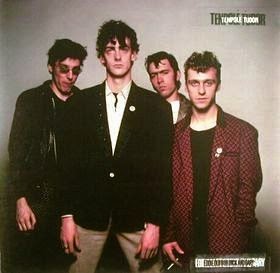
Tenpole Tudor - Eddie, Old Bob, Dick And Gary (1981)
Eddie Tenpole (a/k/a Eddie Tudor-Pole) was at one time, so urban legend goes, tabbed as the replacement for Johnny Rotten in The Sex Pistols.  Indeed, you can find him stumbling his way through "Rock Around The Clock" in his own inimitable singing style in The Great Rock 'n' Roll Swindle.  While that odd, loopy voice would never have worked in the Pistols' setting, with his own band it makes perfect sense.  "Wunderbar" is the standout cut here, but "Three Bells In a Row," "Judy Annual," "I Can't Sleep" and "Go Wilder" do not fall far short in the running.  Proof that punk rock could be every bit as much fun as it could be nasty,

The Diodes - The Diodes (1977)
Among the earliest Canadian punk bands, The Diodes' sound edged closer to what would become skinny-tie power pop than to the harsher sounds of the genre.  Nonetheless, their debut album is stellar from open to close, and clearly influenced many who came after them.  Intelligent and catchy originals like "Death In The Suburbs," "Time Damage" and "Child Star" are coupled with knowing covers of The Cyrkle's "Red Rubber Ball" and Max Frost & The Troopers' "Shape Of Things To Come."  One of my personal favorite albums in my collection.

The Lemonheads - Hate Your Friends (1987)
I can hear some of  you getting ready to argue already: "The Lemonheads fer crissakes?!?"  Yep. Before Evan Dando became the darling of the college radio indie-rock set and MTV's face of alternative music, he and his band issued a debut album that just sizzles with punk attitude and energy, and does it well.  The single "Second Chance" is simply awesome; the title track, "Rat Velvet," "Sneakyville" and "Fed Up" are all great; the closer, "Fucked Up," coulda been an Adrenalin O.D. track.  Pick this one up - you'll be pleasantly surprised.

The Anti-Nowhere League - We Are...The League (1982)
Those who loudly decried punk rock as sick, evil, vulgar and very bad for society would point to bands like The Anti-Nowhere League as proof.  Those people also had no sense of humor whatsoever. The League spouted hateful, foul-mouthed diatribes at everyone and everything and were hysterically funny doing it.  Declaring "I Hate...People" ("...and they hate me!"), insisting they "Can't Stand Rock 'n' Roll" and urging everyone on with "Let's Break The Law," they played up every stereotype the haters threw at punk rock and amped it up beyond belief.  The title track throws a knowing wink into the mix: "Don't you criticize the things we do/No one fucking pays to go see you."

Toxic Reasons - Bullets For You (1986)
Based in Dayton, Ohio, but sounding for all the world like they must have been from the UK, Toxic Reasons issued this sizzling slab of melodic hardcore that has somehow remained fairly overlooked. The songs are anthemic shout-alongs reminiscent of British bands like Abrasive Wheels or Chron Gen, but with decidedly catchy hooks and just a glint of a metal edge.  "Killing The Future," "Never Give In" and "Do What You Can" are all strong enough to stand alongside the classic cuts of the genre; the soul-searching "You Gotta Believe" is simply stunning.  Look for this one.

The Freeze - Rabid Reaction (1985)
The band that offered, in my opinion, the strongest cuts on the seminal This Is Boston Not L.A. comp deliver the goods on this, their second proper album.  A re-recorded version of that compilation's "Trouble If You Hide" leads a pack of snarly, snarky cuts wrapped in attitude and a wicked Boston accent.  "Misguided Memories," "No One's Coming Home," "Before I Hit That Rubber Room" - there's not a clinker in the bunch here.  IMO, the best example of Boston hardcore you can find.

So there you go, my pick for ten albums that generally get forgotten about when those "best of" lists get made.  I know these lists are often argument starters, so have at it either in the comments below or over on the That's What I Was Going To Say Facebook page.  While you're there, if you haven't already, consider giving the page a "like" - I'd love to see that total get to 500!

Thursday, October 9, 2014

Throwback Thursday: Social Distortion "Mommy's Little Monster" (1983)

Every record collector has his stories of great finds and amazing deals, and I'm no different.  Among my crate-digging stories is the day I scored an unopened second-pressing copy of Social Distortion's outstanding 1983 debut album, Mommy's Little Monster, from the swiftly thinning vinyl racks of a mall chain record shop that was making the conversion to CD and cassette only and therefore dumping their vinyl stock for cheap.  Total out-of-pocket cost including tax: $2.12.  That, my friends, is a bargain.

Mommy's Little Monster captures Social Distortion immediately after their 1982 US tour with Youth Brigade chronicled in the excellent documentary Another State Of Mind.  In the interim they had disbanded, but the film got enough interest going in the band again that they reformed and slashed out the album in a single day.  Instead of making everything sound like a rushed job, the extremely short process imbues the album with a consistent sense of immediacy, urgency and energy that reflected the band at that point in time very well.

This isn't the Social Distortion that would evolve in later years, after Mike Ness became a hardened, jaded, modern day version of Johnny Cash.  Here Ness and company are simply punk kids with an obvious appreciation for a well-placed hook and the yet-untarnished spark of enthusiasm that kicked an entire music scene into gear once upon a time.  In nine short but memorable bursts of West Coast punk, Social Distortion created a classic album.

From the dizzying opening riffs of "The Creeps (I Just Wanna Give You)" to the ever-shifting tempo of the album's closer, "Moral Threat," the three A's of the genre (alienation, angst and anger) are consistent themes. Solid playing and some surprising twists keep this from being just another by-the-numbers punk rock record, however: the song which lent its title to the previously mentioned documentary, "Another State Of Mind," briefly drops the dangerous punk swagger for a surprisingly uncertain bit of reflection over life on the road; echoes of the sort of American roots rock that would become a hallmark of Ness's later music are already reverberating under the surface on more than a few tracks here.

The centerpiece, naturally, is the title track.  "Mommy's Little Monster" paints two caricatures of go-nowhere punk kids, one male and one female, as society-rejecting, self-destructive wastes -- at least in the (socially distorted?) view of their parents -- and leaves their tales unresolved and without value judgment.  Are they really so bad for having chosen a path away from the conformist norm? ("His brothers and sisters have tasted sweet success/His parents condemn him, say his life's a mess"  and "Her eyes are a deeper blue/She likes her hair that color too...") Maybe, as another Cali band would suggest a few years later, all they wanted was a Pepsi.

Mommy's Little Monster has been reissued several times over the years on a number of different labels, so it's not difficult to find.  If you don't have this one, you should.


Thursday, September 18, 2014

Throwback Thursday: Angry Samoans "Back From Samoa" (1982)

The Angry Samoans were abrasive, irreverent, sarcastic, crude and, as often follows, damn funny. On their second album, Back From Samoa, they were absolutely brilliant.

Fronted by the snarling "Metal" Mike Saunders, the Angry Samoans were part of the first wave of L.A. hardcore bands in the late 1970s.  While they played as hard and loud and fast as any of their contemporaries, they stood apart from the crowd in attitude. Other bands may have taken the political route or tried to deliver some sort of message in their music, but not the Samoans. Instead, they reveled in B-movie schlock, class-clown antics, and a devastatingly sharp skewering of the very scene they were a part of. They refused to take themselves too seriously, but they had enough of an edge to make you think that they just might be dangerous.

On  top of all that, they were good. Damn good. Their songs were short and punchy (Back From Samoa's 14 songs fly by in just over 15 minutes!) but solid, and the musicianship matched.  Even at top speed, the riffs are crisp, the rhythm on point, and the energy just crackles through the speakers.

Taken at face value, especially in today's Politically Correct world, the album could be seen as jaw-droppingly offensive; in the context of its time and place on the musical spectrum, the calculated shock factor is so defiantly over-the-top as to go beyond cartoonish and into the realm of self-parody. Songs like "They Saved Hitler's Cock," "Homo-Sexual," and the staggeringly foul "Ballad Of Jerry Curlan" (in which the title character's perverted sins, including incest and bestiality, are listed in specific detail) are so far over the line that only the most purposefully obtuse could possibly take them seriously.  The band isn't actually encouraging you to  "put a fork in your hand/poke your eyes out" (from "Lights Out"), they're just having fun (and poking fun at) being a stoopid punk band. Remember, in those days mainstream America thought punk rock was going to take us all to Hell in a hand basket.  The Angry Samoans played right up to that fear and had a good laugh about it.

There are real gems to be found on the album as well:  "Gas Chamber" is in the running for best hardcore song ever written; the sci-fi drenched "Not Of This Earth" foreshadows the direction the Samoans would go musically as the years went on; their cover of the Chambers Brothers' hit "Time Has Come Today" is not to be missed.

Back From Samoa is a classic punk album through and through.  It has been reissued many times on many labels over the years, so tracking down a copy is not difficult at all.  Obviously, the easily offended should stay away; those who can look past the surface and are willing to wallow in the muck for a bit will have a blast.  To give you a taste, enjoy a clip of the Angry Samoans performing "Gas Chamber" and "Not Of This Earth" on New Wave Theater (with a brief interview that includes Saunders grabbing the microphone for an important message) and the actual video the band made for "Time Has Come Today."  Enjoy!


Friday, September 12, 2014

You've Been Comped!
10 of the Best Compilation Albums from the Punk/New Wave Era

The compilation album is a wonderful thing.  In the times long before you kids had your newfangles digital doohickeys that allowed you to set up playlists of your favorite songs we had, of course, the mix tape.  But before even the mix tape, the compilation album was the only way to go to have a mix of artists and songs all in one place.  Part musical sampler platter, part musical buying guide, the compilation was a great way to be introduced to new bands that you were pretty much assured you were going to at least tolerate, if not like enough to go out and find their record. (One friend of mine built the foundation of his record collection on his stated goal to buy "every record by every band on that fuckin' Burning Ambitions album!")

My collection, too, experienced growth as a result of more than one compilation album brought into the house, and I can say from my own experience as a DJ on WDCE in Richmond, VA, that the comp is certainly the disc jockey's friend - a portable record collection in itself if you will.

Today, we celebrate the compilation album with this round up of ten of the best.  You could begin with these ten and branch out from there to create a record collection that would be the envy of all your friends. So let's get to it! In no particular order:

1.  Burning Ambitions: A History of Punk (1984) – If you are looking for one compilation to point to as a basic primer on UK punk rock, this double-record import on the Cherry Red label is the one to pick, hands down.  Though they weren’t able to get the licensing to include the Pistols, The Clash or Siouxsie & the Banshees (a fact bemoaned in the album’s liner notes), they were able to include just about everyone else!   The Exploited, The Damned, Adam & the Ants, Generation X, The Stranglers, The Lurkers, Cockney Rejects, Sham 69 – they’re all here.  Even a couple Yankee acts (Dead Kennedys, The Heartbreakers) show up in the mix.  I remember whole weeks going by when this album did not leave my turntable.  Why would it? It’s a virtual punk rock jukebox!  Essential.


2.  Rodney on the ROQ (1980, 81, 82) – As young punk I remember being pissed off that I lived on the wrong coast to hear the legendary radio station KROQ out of L.A.  I read about the station and the fact that they played -- an actual radio station that actually played -- all these bands I was into.  Longtime DJ and scenester Rodney Bingenheimer led the charge with his Rodney on the ROQ show.  The closest I ever got to hearing the show live was in the form of the three comps put out on the Posh Boy label under Rodney’s name.  All three are excellent, with the first being the best of them:  when you begin with Brooke Shields leading into Agent Orange’s “Bloodstains,” you know you’re in for a helluva fun ride.  Volume One also features The Adolescents, Black Flag, The Simpletones and Cristina’s killer rendition of “Is That All There Is ?”  Volume Two keeps the pace going with Social Distortion, Shattered Faith, The Minutemen, The Little Girls and The Stepmothers; Volume Three counts Ill Repute, Kent State’s killer “Radio Moscow,” Channel Three and a very early cut from The Bangles (when they were still called The Bangs).  Each splits the difference between a definitely punkier side one and new-wavier side two, and each contains a special issue of Flipside magazine.  All three are well worth picking up.

3. IRS’s Greatest Hits Vols. II & III (1981) – A two-record set that begs the question, “Whatever happened to Volume I?”  (Bonus points to the first person commenting with the correct answer.)  IRS (The International Record Syndicate, silly) was one of the most awesome record labels of the early 1980s, and this compilation of artists on their roster at that time is flat-out mind-blowing array of talented artists with the chops and the attitude to not only ride that somewhat tenuous line between punk and new wave, but to stomp it fully into submission.  The Damned, The Cramps, The Fleshtones, Oingo Boingo, The Buzzcocks, The Fall, The Payola$, Squeeze, Skafish, Alternative TV, The Humans, Fashion, Klark Kent and more!  This one was a standard party album for many years around these parts…

4. This is Boston Not L.A. (1982) – A wicked good encapsulation of punk rawk done Boston style and, honestly, one of the best hardcore albums ever.  With bands like Jerry’s Kids, The F.U.’s, Gang Green and The Freeze, how can you possibly go wrong?  Loud, hard, fast and fun – we used to call this stuff “skate punk,” and while it certainly was a youthful scene this old punk still smiles when he hears it.  The Freeze’s stuff is the best here, in my opinion, including classics like “Idiots at Happy Hour” and an otherwise unavailable version of “Trouble if You Hide,” but there really aren’t any duds here either.  The CD adds the 7-inch Unsafe at Any Speed comp released not too long after the album. 

5. No New York (1978) – In the late 1970s, New York City was not a pretty place.  But there were a lot of scenes happening all at once.  You had the Studio 54 disco scene, you had the CBGB’s punk scene, and you had your mind-melting, ear-splitting No Wave scene combining the best parts of both with a little (OK, OK, a lot) atonal saxophone skronk added to the mix.  And you had Brian Eno there to document the latter in this nearly indescribable album.  The Contortions, Teenage Jesus & the Jerks (featuring a shrieking Lydia Lunch on vocals), DNA, and Mars each contributed four cuts of mutant funk-punk squawking and screaming and searing sound.  Some will find it painful to listen to, others (like me!) will revel in its anti-art defiance, but anyone who hears it will not forget it.

6. Not So Quiet On The Western Front (1982) – 2 records. 47 bands in 74 minutes. An insert booklet that doubled as the first issue of Maximum Rock’n’Roll.  About the finest damn hardcore compilation you’re ever going to hear, and proof that those who said all those bands sounded alike either weren’t paying attention or were fucking posers, man.  Just a recitation of the band names will bring a smile to the face of anyone who was into the scene at the time: 7 Seconds, Pariah, Code of Honor, Bad Posture, Flipper, Angst, No Alternative, MDC, and on and on.  It’s fast, it’s furious, it’s excellent.  And oh how we used to laugh (and still do) at the Naked Lady Wrestlers’ “Dan with the Mellow Hair.”  This one has been given a really nice CD reissue with every track intact.  

7. Marty Thau’s 2 X 5 (1980) – Marty Thau had been around the record business forever, and was an early proponent of New Wave, helping many artists get heard through his Red Star record label.  For this compilation he selected two songs from each of five New York City-based bands (hence the album title) and damn if he didn’t go 10-for-10 picking them!  Your big name band here is The Fleshtones, who check in with an early version of “Shadow Line” and a typical ‘Shtones romp, “F-F-Fascination.”  Bloodless Pharoahs go a bit over the top with their purposefully odd vocals, but they did count a young Brian Setzer among the cats in the band.  Neither The Student Teachers nor The Revelons ever made big splashes on the scene, but their contributions here are fantastic (especially Student Teachers’ “Looks,” centered around the great couplet, “I know I got my looks and  you got yours/I guess it just wasn’t what I was looking for…”  A couple of tracks from The Comateens, who would go on to become a second-tier band of some note, round out the collection nicely.  A must-own. 

8. Declaration of Independents (1980) – This early comp collecting assorted regionally well-known independent label acts looking to break big nationally is thoroughly undeserving of its relative obscurity nowadays. (Granted, being on the fairly small but perfectly named Ambition label meant the album wasn’t headed for a high-profile life from day one.)  The biggest name on the album then – and now – would be Pylon, whose debut single “Cool” is found here.  But the music is start-to-finish solid, ranging from the sparkly power pop of Luxury’s “Green Hearts” to the bar band toughness of Robin Lane & the Chartbusters’ “Rather Be Blind.”  There’s rockabilly from Tex Rubinowitz, surf instrumental goodness from D. Clinton Thompson, Kevin Dunn’s giddy synth take on Chuck Berry’s “Nadene,” and – only a few months removed from the Three Mile Island nuclear scare – Root Boy Slim & the Sex Change Band teaching us to do “The Meltdown.”  Don’t miss Washington DC’s Razz (featuring a young Tommy Keene, trivia buffs!), whose contribution “You Can Run (But You Can’t Hide)” is a song begging to be covered for today’s crowd.  

9. Let Them Eat Jellybeans (1982) – Jello Biafra curated this collection released smack dab in the midst of the classic hardcore era. The big names here read like a who’s who of that scene: Circle Jerks, Black Flag, D.O.A., Bad Brains and the Dead Kennedys themselves all make appearances slashing along at top speed.  From Flipper’s “Ha Ha Ha” providing an uneasy funhouse-mirror opening to Voice Farm’s eerily unsettling closer “Sleep,” the album never lets up.  Even a brief side-step in pseudo-reggae (The Off’s wonderful “Everyone’s A Bigot”) is a bit jolting in its frankness, and the guaranteed-to-offend track from The Feederz (“Jesus Entering from the Rear”) simply has to be heard to be believed.  A stunning collection. 

10. URGH! A Music War (1981)  - Soundtrack to the movie of the same name, the double-LP set compiles live performances by a simply fantastic collection of new wave bands ranging from the famous (The Police, Devo and Joan Jett are all here) to the infamous (Skafish’ s “Sign of the Cross” nearly got the whole project banned in some places).   Interesting to note who was left off the album despite appearing in the film:  punk poet John Cooper Clarke, the utterly mysterious Invisible Sex (seriously, has anyone ever heard anything else from them apart from their URGH! performance?) , and the only true punk band in the picture, the Dead Kennedys, were all left off the vinyl.  Still, it sits now as a nearly perfect time capsule of what early 1980s radio would have sounded like in a perfect world.  Avoid the truncated CD reissue and seek out the original vinyl. 

So, there's my list - how about yours?  What are the compilations that got your record collection started?  Which ones do we just have to hear?  Tell us about them in the comments!

Sunday, January 19, 2014

Recommended Reading: Life Won't Wait

Mike Essington's new book, Life Won't Wait, was released a few months ago; I wish I had been in a better head space then and could have properly heralded its arrival.  I wasn't, I didn't, and now I'm catching up, but I sure as hell am not letting any more time slip by without taking the opportunity to say that if you don't pick this one up, you are seriously missing out on the work of a gifted storyteller.

I have been a fan of Mike's writing for awhile now, from his weekly Mike Check column over at the excellent Strange Reaction blog to his must-have debut effort, Last One To Die. He has the ability to relate his stories and reminiscences in a way that puts you right there.  You know these characters, you have experienced these same things, or know someone who has. He never shies from nor attempts to dress up the grittier language or seamier situations of some of his exploits, but that's part of the power of his writing.  It may be rough going at times for some, but it's never vulgar just for shock value.

Mike has shown that he can handle himself in the world of fiction as well (check out the recent chapbook done in collaboration with David Gurz, Under A Broken Street Lamp), but the short autobiographical vignettes that populate his column and made Last One To Die such a stunning read are his wheelhouse. Life Won't Wait certainly follows in its predecessor's footsteps stylistically, but that is no complaint.

Once again, Mike's character studies both entertain and provoke.  I found myself in turns cheering him on to beat the hell out of his half-sister's boyfriend, being surprised at how much empathy I felt for some of the folks he met while incarcerated, and chuckling out loud at his efforts to help Eddie Money buy a pair of Levis.  He shares more typically crazy exploits with his friends, talks about his early days of going to shows (Mike was fortunate to have grown up around L.A. and have access to an incredible early punk scene), and allows us along for the ambulance ride when he thought he might be dying. Each story opens yet another window through which we get to learn a little bit more about Mike himself: punk rock kid, angst-ridden young adult, caring father, regular guy just trying to figure out Life. He's seen and done a lot, believe me.

Mike again closes the book with a section collecting a few interviews he has done over the years: James Frey, Texas Terri Laird, and Steve Jones of The Stepmothers.  And just like the hidden track at the end of an album, make sure not to miss the Epilogue.  It's a brief poem that damn near brought tears to my eyes.

Life Won't Wait is available through Create Space or through Amazon.com, as are Last One To Die and Under A Broken Street Lamp.


Enhanced by Zemanta

Wednesday, July 13, 2011

A Bit of My Hometown's Punk Rock History

Over at the always interesting ...tapewrecks... blog, Tom Quinn has curated an excellent oral history of Lancaster, PA's "First Punk Rock Band," The Bodies.  Better yet, he has rescued a handful of rare recordings of the band, who never released any records during their brief existence. 

The Bodies were essentially a cover band.  They learned Punk Rock from vinyl and snarled through the songs they liked best, spreading the good word to a bunch of misfit kids in the heart of Amish country.  There were very few originals in the mix, but The Bodies were still a band, a Punk Rock band dammit, and right here in Lancaster!  They were the ones who kicked open the door for our scene; they inspired other bands to start playing, and they themselves went on to join other bands through the years.

Get yourself over to ...tapewrecks... and read, listen and learn, my friends.  The story of The Bodies is not a unique one, but it is an important one for those of us who grew up in the scene around these parts.  Those of you who are from other places have your own "First Band" stories - I'd love to read them.  Those were good times...
Enhanced by Zemanta

Monday, June 13, 2011

New Wave for the New Week #126

The history of Punk Rock is littered with tales of tortured, misguided souls who destroyed themselves with drugs.  The most well-known cases (Sid Vicious, Darby Crash) were particularly sad because it seemed no one ever tried to stop them, and they were certainly incapable of stopping themselves.  A third case, one which gets considerably less press, at least saw his bandmates make it clear to him that there was a problem, but it was too little, too late.

Malcolm Owen formed The Ruts in 1977 with Paul Fox, Segs Jennings and Dave Ruffy.  They infused their take on UK Punk with Funk, Dub and Reggae, creating a sound that landed about midway between The Sex Pistols and The Clash.  After two years of playing the pubs and clubs circuit, they had their first single in the record shops, 1979's "In A Rut," which remains one of the best singles of the era.  In a bit of eerie foreshadowing, the b-side was a song called "H-Eyes," a warning against the dangers of heroin addiction in which Owen sings, "...it's gonna screw your head, you're gonna wind up dead..."

The popularity of "In A Rut" got The Ruts signed to Virgin Records, who promptly issued two more singles, "Babylon's Burning" and "Something That I Said," both of which became decent hit records in the UK, and demand for a full album began to grow.   That album, The Crack, appeared in September of 1979, with the two Virgin singles re-recorded for the LP, as well as some new material.  One of the new tracks, "Jah War," was released as the next single; its Dub Reggae sound was an abrupt shift from the sneering Punk of the earlier singles, and helped The Ruts reach a wider audience (especially since The Clash had already begun to blaze the trail from Punk to Reggae).

The following year, The Ruts released the outstanding single "Staring At The Rude Boys," but Owen was becoming unreliable due to increasingly heavy drug use.  After a sixth single, "West One (Shine On Me)," the rest of the group fired Owen, giving as reason their inability to work with him in his addicted state.  After a short period of inactivity, the band and Owen reached an accord and reuinited.  One would assume that part of the reconciliation would have had to include Owen getting the help he needed, but it never happened.  On July 14, 1980, Malcolm Owen was found dead of a heroin overdose at his parents' home, only 26 years old at the time of his death.

Later in the year, The Ruts released a second album, Grin And Bear It, as a tribute/goodbye to Owen.  Containing the new singles as well as an assortment of demos and live material, it's a brief window into what could have been.

The rest of the band continued on for awhile under the name Ruts D.C. ("da capo," a Latin musical term meaning "from the beginning"), following the Reggae/Funk path the band had begun to explore and adding bits of Jazz to mix, but the fire was gone.  Had Owen not destroyed himself with heroin, The Ruts may well have evolved into the equal of The Pistols or The Clash; the potential was certainly there.  As it is, we are left with an album and a half's worth of material and the question, "What if?"

Our clips this week nearly bookend The Ruts' recording career. First up is the classic "In A Rut," and then the excellent "Staring At The Rude Boys."  Enjoy.


Monday, February 21, 2011

New Wave for the New Week #112

"[Their debut album is] the equal of the first Sex Pistols or Clash LP, a hasty statement that captures an exciting time," crowed Trouser Press.  "[They] captured the spirit of the times few contemporaries could match," declared Colin Larkin in The Guinness Book of Top 1000 Albums. Dave Thompson, in his book Alternative Rock, asserts that they "[spat] out a failsafe succession of songs which still delineate punk’s hopes, aspirations and, ultimately, regrets."

Pretty heady praise for a bunch of kids from Bideford who gave us only two albums in a brief three-year career, but The Adverts more than lived up to such hype.  The eventually married couple of TV Smith (vocals) and Gaye Advert (bass) formed the core of the group, creating both a sound and a visual that is today more associated with memories of UK Punk style than anything The Pistols or The Clash left behind.  (Check TV Smith in plastic shades and pinned-up jacket lurching about in the first clip below; Thompson accurately noted that Gaye Advert's "panda-eye make-up and omnipresent leather jacket defined the face of female punkdom until well into the next decade.") With the addition of guitarist Howard Pickup and drummer Laurie Driver, The Adverts dove right into the epicenter of the UK scene, The Roxy, opening for Generation X in January of 1977.

They were immediately well received, and would play The Roxy regularly during that year, quickly being signed by Stiff Records thanks to having a patron in Brian James of The Damned.  Their first single, "One Chord Wonders," appeared in the spring of 1977, followed a few months later by their first UK Top 40 hit, the sneeringly clever "Gary Gilmore's Eyes," about a man who awakes from surgery to discover the serial killer's eyes have been transplanted into his skull.  (In reality, Gilmore actually did have his eyes and other organs donated after his execution, and several people did benefit.  Gilmore's is a fascinating if unsettling tale.  Go read Norman Mailer's account of Gilmore's life, crimes and psychosis, The Executioner's Song, for more.)

Despite its success, that single was not included on the original pressings of The Advert's debut album, Crossing The Red Sea With The Adverts, which landed in stores in early 1978.  The album didn't need that hit single to carry it; it stood quite well on its own, thank you, with classics like "Bored Teenagers," "No Time To Be 21," "Safety In Numbers," and "Great British Mistake" making it an absolute must-own. If you don't know these songs by heart already, you won't pass Punk Rock 101 until you do.

Over the next year or so, The Adverts toured heavily.  Driver, unfortunately, contracted hepatitis, and was eventually replaced by Rod Latler; keyboardist Tim Cross was also added to the band at this time.  TV Smith was evolving as a songwriter, and The Adverts' sound was maturing.  When their second album, Cast Of Thousands, was released in 1979, it was met with some disappointment by fans who still wanted the raw power of the first album.  The sneer was not completely gone, mind you, but it was buried a little bit further back in the mix.  Taken on its own, it is a fantastic record with more outstanding tunes: "Television's Over," "Cast Of Thousands" and the eponymous "The Adverts" are all strong enough to stand alongside anything from the first record.  But poor press and poor promotion from their label combined to take its toll.  Howard left the band, and soon after The Adverts were no more.

But they did leave behind some great, great music, and deserved to be remembered as one of the best of the original UK Punk Class of '77 bands.  I am so fond of them that I am sharing three clips with you this week: first, the band's appearance on Top Of The Pops performing "Gary Gilmore's Eyes," then a clip for "No Time To Be 21," and finally, an audio-only clip of "The Adverts" from Cast Of Thousands. Enjoy!


Enhanced by Zemanta

Monday, November 22, 2010

New Wave for the New Week #101
BY REQUEST!

[All throughout the month of November, all NW4NW entries are based on requests made by you, dear readers. Because of the amount of requests received, there will often be more than one entry per week during this month - I recommend signing up for email alerts on the left-hand side of the screen so that you don't miss any of the fun! I cannot take anymore requests for this month, but please always feel free to suggest bands you might like to see featured in future NW4NW posts. You may do so either in the comments section of this post, on Twitter, or on the Facebook Fanpage.]

My good friend Dave Demmin is one of a handful of repeat requesters from last year, I'm pleased to say.  Dave knows good music, with tastes definitely leaning toward "surf punk." Since I'd already done a NW4NW entry on one of his favorite bands, The Surf Punks (surprise surprise!), he suggested another band that traded in that same beach-y twangy sound.

Mike Palm, Scott Miller and Steve Soto formed Agent Orange in Fullerton, CA, as the 1970's faded into the sunset.  Drawing as much from The Ventures and Dick Dale as they did from The Ramones and The Sex Pistols, Agent Orange set themselves apart from the emerging hardcore scene by mitigating the hyperspeed roar with pop sensibility and a laid-back California surfer attitude.  Their earliest record, the 7-inch EP Bloodstains, caught the ear of LA disc jockey/scenester Rodney Bingenheimer, who spun the title track regularly on his radio program on the influential KROQ as well as including Agent Orange cuts on each of the first two Rodney On The ROQ compilation albums before the band even had their own first album out.

That local exposure created an expectant buzz around Agent Orange's 1981 debut LP, and Living In Darkness delivered the goods: a slightly more polished recording of "Bloodstains" highlighted a pack of now-classics including "Everything Turns Grey," "Too Young To Die," and "A Cry For Help In A World Gone Mad." Their surf-rock tendencies were brought to the forefront with covers of genre standards "Pipeline" and "Miserlou." One of the best records of that year, and simply a must-own.  The following year's Bitchin' Summer EP kept the momentum going with similar material. (The later CD reissue sports different cover art and appends both EPs.) 

After a two-year wait, Agent Orange was back in the record racks with When You Least Expect It. Originally released as a 4-song EP, it was later reissued with two more tracks added.  Kicking off with the insanely catchy "It's Up To Me And You" and sporting a cranked-up cover of Jefferson Airplane's "Somebody To Love," the record saw the band begin to solidify a fan base of surfers of a different kind - those who surfed the sidewalks instead of the waves.  Their next full album, 1986's This Is The Voice, capitalized on the skate-punk scene.  Sporting some great tunes ("It's In Your Head," "Fire In The Rain") and crisper production than previous efforts, its poppier sound makes it a somewhat different record from Living In Darkness, though no less enjoyable.

After that record, Agent Orange dropped off the map for awhile, reappearing in 1991 with a live album, Real Live Sound.  With an ever-revolving group of sidemen, Palm was keeping the band alive on the road; this album, while not essential, documents the band's setlist of the era: a mix of back-catalog classics and well-chosen covers, played in front of an appreciative crowd.  New Agent Orange material would not arrive until five years later with the release of Virtually Indestructible.  No new ground was broken here - fans of This Is The Voice and When You Least Expect It will love Virtually Indestructible, too.

Two attempts at "Greatest Hits" type collections are worth noting if only for the buyer-beware factor: Greatest And Latest from 2000 sports some new material and some classic titles, but these are 2000-vintage re-recordings of old material, not the original recordings.  Sonic Snake Sessions is a two-disc set released in 2003 which basically combines When You Least Expect It, This Is The Voice, and Real Live Sound under one title.  Neither is altogether bad, but be sure you know what you're getting.

Palm and company continue to tour - in fact, I recently had to kick myself for missing them live in Harrisburg, PA, about 45 minutes from me, about a month or so back - and given the historically long stretches between Agent Orange releases, we can hold out hope that there is more good music to come.  In the meantime, enjoy a couple of classics: here is a live performance circa 1983 of "Everything Turns Grey," and an audio-only of the classic "Bloodstains." Thanks go out to Dave Demmin for a great request!


Monday, June 15, 2009

New Wave for the New Week #14

LONDON - MAY 09:  Nick Cave of Grinderman perf...Image by Getty Images via Daylife

If you had asked me 25 years ago to speculate on who would become the elder statesmen of Punk/New Wave/Post Punk/Alternative/Whatever-you-wanna-call-this Music, Nick Cave's name would not have been anywhere near the top of my list. His band at the time, The Birthday Party, while one of my favorites, was certainly an acquired taste, often spewing out discordant shrieking mutant swamp-blues like Captain Beefheart in a foul mood. Nick himself seemed unlikely to survive the next 25 years. His infamous heroin habit left him a gaunt, almost spectral figure to behold; pictures of him in full-blown junkie nod were common.

But here we are in 2009, and Nick Cave has been clean for ten years and has been making music non-stop for thirty-plus. After The Birthday Party dissolved, he formed Nick Cave and the Bad Seeds and created sinister pseudo-countrified dirges that were a bit easier on the ears; his solo work has seen him team up with fellow Aussie Kylie Minogue in a "this doesn't seem right but somehow it works" ballad "Where the Wild Roses Grow," which will haunt you to your core; his side-project combo Grinderman harkens back to some of the terror of The Birthday Party's finest moments filtered through Bad Seeds era eerie calm. He is a novelist, an actor, a painter. He has indeed become one of the most important figures to emerge out of that Post Punk scene.

But, oh, where it all started!

Nick and some of his school chums formed his first band, The Boys Next Door, in the early '70s; as the Punk and New Wave scene began to infiltrate his native Australia in the form of bands like The Saints and Radio Birdman, so The Boys Next Door's music began to evolve to mesh with that sound. The Boys Next Door would eventually release one incredible album, Door Door, and an EP, Hee Haw, both in 1979. That same year, they would have a decent Australian hit with a murky ballad, "Shivers," which was among the first things Nick Cave recorded that sounded like what most people think of when they think of Nick Cave.

Indeed, The Boys Next Door would essentially morph into The Birthday Party; Hee Haw would be re-released as a Birthday Party record with all references to the previous band name expunged.

Our clip this week is a real gem: a very young Nick Cave in front of The Boys Next Door in 1978, performing the almost bubblegum-sounding "The Nightwatchman." This gooey piece of New Wave goodness captures an nearly exuberant Nick Cave pre-Birthday Party muck, pre-Bad Seeds sinisterness, and obviously pre-heroin. Enjoy and be amazed:


Reblog this post [with Zemanta]

Tuesday, May 19, 2009

Punk Rock Weekend, Part Two

And now, on with the tales from the road:

After the Damned show was over, we partook in one of the longstanding traditions of punk show evenings: 2:00 AM breakfast at whatever 24-hour place happens to be accessible. In Friday's case, it was the I-HOP. By about 5:00 AM as I lay in my hotel room bed, I realized that, perhaps, at age 42, an evening of beer drinking followed by steak and eggs, pancakes and black coffee is no longer as nifty a combination as it may have been twenty years ago. As they say, live and learn.

We hit the road by 11:00 AM the next morning, heading out to PS's house just west of Harrisburg, PA - about a three-hour trip. Our plan was to stop there, make some sandwiches or something for dinner, and leave from there to Baltimore, about an hour and forty-five minutes south. We'd drive back the same night and save a second hotel fare. First, though, another punk show travel tradition: a record store run. The Record Collector in Bordentown, NJ, is a funky little shop nestled within a residential area. In business for 20 years, they still stock more vinyl than CDs. With shelves of used LPs, record covers adorning the walls, and the couple who has owned the shop these past two decades running the register and scurrying about helping customers find things, this is no "music and electronics boutique" like you might find in the mall. This is a real honest-to-goodness record store, the way they were meant to be. Browsing is a little difficult, because the albums are not in bins that you flip through but rather on shelves, library style, with spines facing you, and the CDs are scattered about the store on racks and in piles with no easily discernible system of organization. By chance, we happened to show up on a day when Bordentown was having a local street fair that reminded me of Virgil, TX's Celebration of Specialness from the movie True Stories, so there were people milling about, streets blocked off, and all sorts of activities adding to the confusion. I was able to find Tubeway Army's 1978 EP, which I've been looking for for some time, so the record run was not in vain.

On the road again, I found myself nodding off in the back seat for much of the trip back to PA. I was told that I somehow managed to sleep essentially sitting up, with head bent over like a marionette with a broken string. If nothing else, it meant I didn't snore, which was a blessing to others in the car. Believe me, after a lifetime of sinus issues, I can saw some logs!

The overall laziness continued throughout the afternoon. PS took a power nap upon arrival at his house, as he was our driver for the entire trip; his wife had been snoozing in the passenger seat during the ride as well. We refueled with some sandwiches, and by 6:45 we were back on the road to Baltimore.

The Saturday night show was going to be a very different musical experience. Whereas The Damned have evolved over 30+ years from slash-n-bang punk rock to gothic psychedelia, The Business have never strayed from their straight-ahead Oi! sound. The Damned brought out punks, new wavers, and goths; The Business would bring out the skinheads. With four opening bands, this show was almost a mini Oi!-fest, and experience shows that, at times, the skinhead crowd brings along with it the unfortunate extremists, both racist and violent. This would not be the case in Baltimore, however - this was a crowd who was there to have a good time and nothing more. I thankfully saw no indication of a racist element in attendance, and not a single fight broke out the entire evening. It made for an enjoyable show indeed.

The Ottobar is a fairly cramped little hole-in-the-wall on a corner of North Howard Street. As one friend described it, it looks as though it came straight from the cover of The Exploited's Troops of Tomorrow album. In a rundown neighborhood, with a crumbling-macadam parking lot and surrounded by cyclone fence grown over with weeds, situated among probably vacant buildings colored with graffiti, it's not the most inviting venue. It suits the purpose, though, and I have seen a couple of bands there.

We missed the first band, but arrived in time to see The Dead End Boys deliver a high-energy set that had the crowd shouting along as one, and saw the mosh pit going almost constantly. They were followed by Iron Cross, a very tight band who picked up right where The Dead End Boys left off and kept the surge of energy going in the crowd.

The Dead End Boys

Iron Cross

As Iron Cross finished up, I headed to the bar for a beer. As I pushed through the crowd to the bar, I saw a figure that stood out in stark contrast to the skinheads and punks milling about. This was an older gentleman, dressed very well, and drinking from what looked like a cognac glass. He looked very familiar, and I did that quick scan of my memory banks we all do when we think we know someone. Then it struck me. I went back to my friends and told them, "I think John Waters is here." At first I doubted my own identification of Waters, but then I thought, well, we are in Baltimore. We headed back to the bar to verify, and sure enough, there sat John Waters. Of course, there were people beginning to flock to him and shake his hand and tell him how much of a fan they were. While he was not impolite to anyone, his demeanor made it clear he wasn't thrilled. He was there with someone and trying to carry on a conversation, and the interruptions were obviously intrusive. For that reason, we decided not to be one more interruption, and didn't go over to him. Before the next band hit the stage, he was gone.

The next band was Flatfoot 56, a Chicago-based band who I enjoyed so much I bought both of their CDs at the concession table. Their hyper-speed street punk was given a unique twist thanks to one member of the band who alternately played either bagpipes or mandolin. Never saw anyone play a set of bagpipes so fast in all my life! These were fun-loving punks, a little goofy but boy could they play. They closed with a faster-than-you-can-imagine cover of "Amazing Grace" that had the whole place singing (chanting?) along.

Flatfoot 56 - punk rock with bagpipes!

By the time the headliners came on, it was a wonder anyone had any energy left - but they did, and more, and The Business delivered. Mickey Fitz is looking his years, but he lead his band through a set that was made up mostly of classics like "Smash the Discos", "Loud, Proud and Punk" and "Harry May", but they also did the title track to their current Mean Girl EP. They played about a 45 minute set, and then brought the members of the other bands onstage for a huge sing-along on the final two songs of the night, ending with "Drinking and Driving" with the whole club singing along. All in all a fun show.

The Business

Everyone onstage for the finale.

We were back on the road and back in PA by about 2:30 that morning, and took Sunday as a lazy day to meander back to Lancaster. It made for one of the better weekends of the year so far, and put me in a great frame of mind.

It's interesting to me to see the differences between today's punk kids and the way we were twenty years ago. For one thing, it amazed me to see a number of girls getting into the mosh pit Saturday night and holding their own with the burliest skinheads. Seldom if ever did the girls get into the pit back in the day. Nowadays, the kids have to contend with us old heads at the shows. Twenty years ago, we eyed anyone at the show who looked to be over 25 with great suspicion; the kids today are - dare I say - downright polite and respectful to the 40+ crowd. Perhaps we were not as progressive back then as the kids are today. Oh, some things never change: every show has "That Guy" - the person who has had more than a little too much to drink and has begun to act like a royal ass, either getting into fights or just acting stupidly. The kids still fall into their cliques, with punks hanging with punks, goths with goths, skinheads with skinheads, and to say that there is never any trouble between groups would be hideously naive. Still, it makes me smile to see that two decades later, a punk show is still pretty much the same thing as a punk show was when I was that age.

Next up on the concert horizon for me? X is coming to Baltimore in a few weeks; in August Blondie and The Donnas are touring with, of all people, Pat Benatar. So, there will be more stories from the road. I'd love to hear some of your road stories as well - share some of your favorite recent concert road trips in the comments, won't you?

The kids in the pit.


Reblog this post [with Zemanta]